
Can Termites Live in Furniture?
Enter your zip and we'll take it from there.
Yes. Drywood termites can live entirely inside wooden furniture, including tables, chairs, cabinets, bed frames, and other solid-wood items.
Unlike subterranean termites, which generally maintain a connection to soil, drywood termites get the moisture they need from the wood they infest. That allows a colony to survive inside a piece of furniture for an extended period without being obvious from the outside.
In South Florida, this matters because drywood termites are well established and can infest both structural wood and movable wooden items. Hulett notes that termites may even be introduced into a home through already-infested furniture or cabinetry.
What Do Termites in Furniture Look Like?
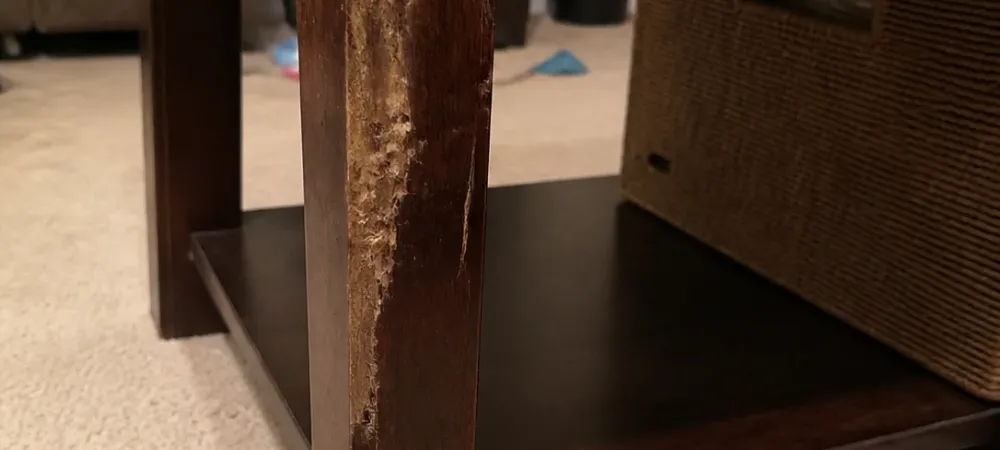
The termites themselves may be difficult to see because most of the colony remains hidden inside the wood. Instead, homeowners are more likely to notice evidence of the infestation.
Common signs of termites in furniture include:
- Small piles of pellet-like droppings, called frass
- Tiny holes where termites push frass out of the wood
- Hollow-sounding wood
- Blistered or warped wooden surfaces
- Discarded wings near the furniture
- Wood that appears weakened or breaks more easily than expected
Drywood termite frass is especially useful for identification. The pellets are small and hard and may collect beneath a piece of furniture as termites remove waste from their galleries.
If you clean up the pellets and another pile appears in the same area, that can be a sign of continuing activity.
Can Termites Spread From Furniture to Your House?
Yes, an infested piece of furniture can introduce drywood termites into a home.
A colony may remain confined to the original item for some time, but mature drywood termite colonies eventually produce winged reproductive termites known as swarmers. Those termites can leave the furniture, pair up, and attempt to establish new colonies elsewhere in suitable wood.
That means an infested chair or cabinet should not be viewed only as damage to that individual item. Bringing active termites indoors can potentially introduce them to other wooden materials throughout the home.
This is particularly important when purchasing:
- Antique furniture
- Secondhand furniture
- Used cabinets
- Wooden décor
- Salvaged lumber
- Wood items that have been stored outdoors or in a garage
You do not necessarily need to avoid secondhand wood altogether, but inspecting it before bringing it inside can reduce the chance of unknowingly introducing termites.
How Do Termites Get Into Furniture?
Drywood termites typically infest wood when winged termites swarm and find an exposed crack, joint, or unfinished area where they can begin a new colony.
Furniture can become infested:
- Inside a home
- In a garage or storage building
- In a warehouse
- During transportation
- Before the furniture is purchased
- While stored outdoors or in another infested structure
Once a pair establishes itself inside the wood, the developing colony can remain concealed for years. This is one reason termite-infested furniture may appear completely normal when it is first purchased.
Do Termites Only Infest Old or Antique Furniture?
No. Termites can infest newer furniture as long as the wood provides a suitable place for a colony.
Antiques and secondhand pieces may receive more attention because their history is unknown, but the age of the furniture itself is not what determines whether termites can live inside it.
What matters more is whether termites were able to access the wood and establish a colony. Solid wood components are generally of greater concern than materials that contain little usable wood, although termites can sometimes reach wooden framing hidden beneath upholstery or other finishes.
What Should You Do if You Find Termites in Furniture?
If you suspect termites are living in a piece of furniture, avoid immediately moving the item to another room or giving it to someone else.
Start by having the evidence professionally identified. Frass, small holes, and damaged wood can point toward drywood termites, but beetles and other wood-destroying insects can sometimes leave similar evidence.
Once the pest is identified, the next step depends on:
- Whether termites are currently active
- How extensively the item is infested
- Whether other furniture or structural wood may also be affected
- The size and construction of the item
- Whether the piece can be treated separately from the home
An inspection of the surrounding home may also be worthwhile, particularly if the furniture has been indoors for an extended period or termite swarmers have been observed.
Does Termite-Infested Furniture Mean the Whole House Needs to Be Tented?
No. Finding termites in one piece of furniture does not automatically mean the entire home requires fumigation.
If the infestation is limited to a movable item, treating that item separately may be possible. Hulett operates a dedicated fumigation vault in West Palm Beach where furniture and other removable items can be treated without tenting the entire house.
The item is taken to the facility, placed inside the fumigation vault, and treated separately from the home. This approach can be useful when the infestation has been confirmed in furniture, cabinetry, or another removable wooden item rather than throughout the structure.
If an inspection finds drywood termites elsewhere in the home, however, additional treatment may be necessary.
Can You Save Furniture That Has Termites?
Often, yes. Termite activity does not automatically mean a piece of furniture must be thrown away.
Whether the furniture is worth treating depends largely on how much physical damage has already occurred. Fumigation can eliminate termites inside the item, but it cannot restore wood that has been structurally weakened or heavily excavated.
A valuable antique or otherwise sound piece may be a good candidate for treatment. Furniture with extensive damage may require repair afterward or may no longer be practical to keep.
Check Wooden Furniture Before Bringing It Home
Termites living inside furniture are easy to overlook because most of the infestation stays hidden within the wood. Before bringing used or antique furniture into your home, check joints, undersides, drawers, and other unfinished areas for frass, small holes, discarded wings, or unusual damage.
If you discover evidence after the furniture is already inside, professional identification can determine whether you are dealing with drywood termites and whether activity appears limited to the item.
Hulett's furniture and vehicle fumigation service can treat qualifying infested items separately at its West Palm Beach fumigation facility, helping address the infestation without automatically fumigating the entire home.