
Common Pests New South Florida Homeowners Should Know
Enter your zip and we'll take it from there.
Moving to South Florida comes with plenty of adjustments, and the local pest population may be one of the more unexpected ones. Warm temperatures and long periods of humid or rainy weather allow many insects to remain active for much more of the year than they do in colder regions.
Some pests are mostly annoying, while others can damage a home or become a persistent indoor problem. Here are several South Florida pests new homeowners are especially likely to notice—and what their presence may actually mean.
What Are the Most Common Pests in South Florida Homes?
South Florida homes commonly encounter cockroaches, ants, termites, mosquitoes, spiders, rodents, and a variety of occasional invaders. However, newcomers are often most surprised by pests that are either unusually abundant here or known by unfamiliar local names.
A few worth learning early include:
- Palmetto bugs
- Millipedes
- No-see-ums
- Termites
- Ghost ants
- Lovebugs
- Scorpions
Seeing one of these pests does not always mean you have an infestation. The location, number of pests, and frequency of sightings are usually more useful clues.
Palmetto Bugs
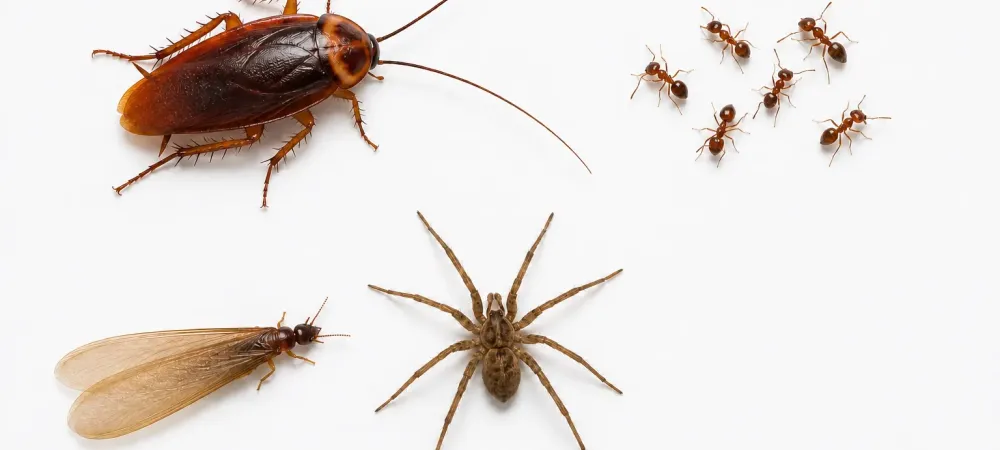
“Palmetto bug” is a common Florida name for several large cockroach species, particularly the American cockroach. So if someone tells you the large reddish-brown bug running across the patio is “just a palmetto bug,” they are still talking about a cockroach.
These larger roaches often live outdoors around mulch, drains, landscaping, and other damp areas. One may occasionally wander indoors, especially after heavy rain, but repeated sightings inside can point to moisture, entry points, or a nearby population that needs attention.
Millipedes
Millipedes are especially noticeable during long stretches of wet weather. They normally live in damp soil, mulch, leaf litter, and other areas with decaying plant material, but saturated ground can push large numbers onto patios, driveways, exterior walls, and sometimes indoors.
They are generally considered nuisance pests rather than a threat to the structure. If they keep appearing inside, however, excessive moisture, thick mulch, or gaps around doors may be contributing to the problem.
No-See-Ums
No-see-ums are tiny biting flies, also known as biting midges, that can be especially noticeable near coastal areas, waterways, and marshy environments. Their size makes them difficult to see, but their bites are often hard to miss.
They can also pass through some standard window and patio screens, which can surprise homeowners who assume a screened enclosure will keep out every biting insect. Activity is often most noticeable around dawn and dusk, though local conditions can affect when they are active.
Termites
Termites are one of the more important pests for new South Florida homeowners to understand because both drywood and subterranean termites are established in the region.
Subterranean termites generally live in colonies associated with the soil and may build mud tubes to reach a structure. Drywood termites can establish colonies directly inside wood without maintaining contact with the ground.
Warning signs worth taking seriously include:
- Mud tubes
- Discarded termite wings
- Small piles of drywood termite frass
- Hollow or damaged wood
- Swarming termites indoors
If you find something suspicious, our termite control services cover both drywood and subterranean termite problems.
Ghost Ants
Ghost ants are tiny household ants that can be easy to miss until they form visible trails along countertops, sinks, windows, or walls. Their pale coloring and small size make them look almost transparent in some lighting.
They are common in South Florida homes and are often drawn to moisture and food sources indoors. A few wandering ants may not mean much, but recurring trails usually point to an established colony nearby.
Scorpions
Yes, scorpions do occur in South Florida. Homeowners may find them in garages, landscaping materials, debris, or other sheltered areas where they can hide during the day and hunt small insects.
Seeing one can be surprising if you moved from an area where scorpions are uncommon, but an occasional sighting does not necessarily mean there is a major infestation. Reducing clutter and controlling the insects they feed on can make the property less favorable to them.
Lovebugs
Lovebugs are seasonal flies that become extremely noticeable when adults emerge in large numbers. They are best known for gathering around roads and sticking to vehicles, where their remains can become difficult to remove if left in place.
Despite how overwhelming a swarm can look, lovebugs do not bite or sting and are not typical household pests. Their activity is seasonal, so large populations usually subside rather than becoming a long-term indoor problem.
Does Seeing Bugs Mean Your New Home Has a Pest Problem?
Not necessarily. South Florida's year-round pest activity means an occasional insect indoors can happen even in a well-maintained home.
What matters more is the pattern you are seeing. Warning signs of a larger problem include:
- Multiple pests appearing regularly indoors
- Ant or cockroach activity that keeps returning
- Droppings or gnaw marks
- Termite mud tubes or frass
- Pests emerging from walls or cabinets
- Repeated activity in the same room
- Large numbers appearing without an obvious outdoor cause
A single millipede after several days of rain is very different from cockroaches appearing throughout the kitchen every night.
Getting Used to South Florida Pest Activity
One of the biggest adjustments for new South Florida homeowners is realizing that pest season never completely switches off. Different pests become more or less noticeable as rainfall, temperature, and other conditions change, but many remain active throughout the year.
Learning which pests are common makes it easier to separate an occasional Florida visitor from something that needs treatment. If activity becomes persistent or you are not sure what you are seeing, Hulett’s residential pest control services can help identify the pest and determine whether treatment is needed.