
Does Professional Pest Control Require Treating The Entire House?
Does professional pest control require treating the entire house?
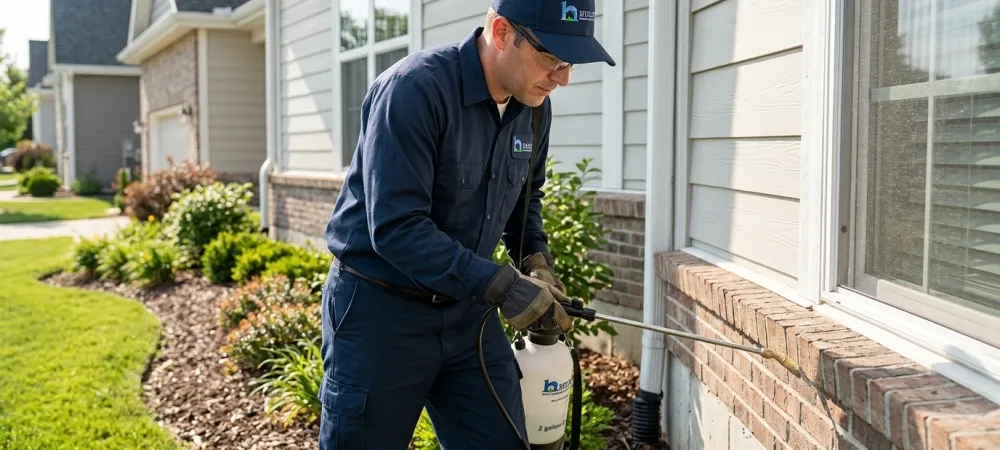
No, professional pest control does not always require treating the entire house. Preventive service may focus on the foundation and likely entry points, such as door frames, to help keep pests outside. The appropriate treatment area for a property in Palm Beach County and the Treasure Coast area depends on the pest activity present.
When Is Exterior Pest Control Appropriate?
Exterior pest control is often appropriate when the primary goal is to prevent pests from entering the home. Rather than automatically treating every indoor room, a technician may concentrate on areas where pests are likely to approach the structure or find a way inside.
These areas may include:
- The foundation perimeter
- Exterior door frames
- Window frames and other openings
- Cracks or gaps around the structure
- Areas where utility lines enter the building
- Other accessible locations that may serve as pest entry points
Treating these areas creates a preventive approach focused on limiting pest activity before it moves indoors. This may be suitable when there is no evidence of a significant interior infestation and the property owner wants ongoing protection against pests that commonly approach from outside.
Exterior service can be especially relevant for homes in Palm Beach County and the Treasure Coast area, where environmental conditions may support pest activity around residential properties. However, the presence of pests outdoors does not automatically mean every room inside the house requires treatment.
When Might Interior Pest Treatment Be Necessary?
Interior treatment may be appropriate when pests have already entered the home or when an inspection identifies activity in specific indoor areas. In these situations, the service can be directed toward the locations where pests are present rather than applied throughout the entire house without a clear reason.
Signs that may support an interior evaluation include:
- Repeated sightings inside the home
- Pest activity near kitchens, bathrooms, or storage spaces
- Droppings, shed material, or other physical evidence
- Activity within wall voids, cabinets, or enclosed areas
- An infestation involving pests that have established themselves indoors
The pest species also influences the treatment plan. Ants entering through a door frame may require a different approach than termites occupying wood or rodents moving through structural openings. A professional inspection helps determine where the activity is occurring and whether exterior service, targeted interior treatment, or a combination of both is appropriate.
Therefore, professional pest control does not necessarily mean treating every interior surface. The service area should reflect the nature, location, and extent of the pest problem.
How Do Technicians Determine Which Areas to Treat?
A technician begins by evaluating the available evidence of pest activity. This may involve inspecting the foundation, entry points, moisture-prone areas, accessible interior spaces, and locations where the homeowner has noticed pests.
The treatment recommendation may depend on several factors:
- Pest type: Different pests enter, nest, and travel through properties in different ways.
- Location of activity: Exterior activity may call for perimeter service, while confirmed indoor activity may require targeted interior attention.
- Extent of the problem: An isolated sighting and an established infestation may not require the same response.
- Potential entry points: Gaps around doors, windows, pipes, and other openings can influence where preventive treatment is applied.
- Property conditions: Landscaping, moisture, stored materials, and structural openings may affect where pests are active.
This assessment allows the technician to choose treatment areas based on observed conditions. Some properties may need exterior-only prevention, while others may benefit from both exterior and limited interior service.
Common Misconception: Every Pest Control Visit Requires Indoor Spraying
A common misconception is that professional pest control must include spraying throughout every room to be effective. In many preventive situations, the main objective is to address pests around the exterior before they enter the living space.
Interior treatment is not automatically necessary when there is no evidence of pests inside. Conversely, exterior service alone may not be sufficient when an indoor infestation is already established. The appropriate approach depends on inspection findings rather than a universal whole-house treatment plan.
FAQ
Can pest control be effective when treatment is applied only outside?
Yes. Exterior treatment may help prevent pests from entering by focusing on the foundation, door frames, and other likely access points when no significant indoor activity is present.
Will a technician inspect indoors even if exterior treatment is planned?
An indoor inspection may be appropriate when there have been pest sightings or other signs inside. The technician can use those findings to determine whether targeted interior treatment is needed.
Does seeing one pest mean the entire house needs treatment?
Not necessarily. A single sighting does not establish the location or extent of a problem. An inspection can help identify whether activity is isolated, recurring, or more widespread.
Can exterior and interior pest treatments be used together?
Yes. A combined approach may be appropriate when pests are active indoors while additional treatment is needed around exterior entry points to help limit continued access.
Does professional pest control require treating the entire house?
No, professional pest control does not always require treating the entire house. For prevention, technicians may apply treatments around the foundation and likely entry points, such as door frames, to help keep pests outside. In Palm Beach Gardens, Florida, the appropriate treatment area depends on the pest activity present.
Conclusion
Professional pest control does not always require treating the entire house. Preventive service may focus on the exterior foundation and likely entry points, while confirmed indoor pest activity may call for targeted treatment in affected areas. The appropriate plan depends on the pest species, evidence present, and conditions around the property.
If you are noticing pest activity in Palm Beach County and the Treasure Coast area, Hulett Environmental Services can inspect the property and recommend pest control services suited to the areas where treatment is needed.