
How Do I Find Where Pantry Bugs Are Coming from in My Kitchen?
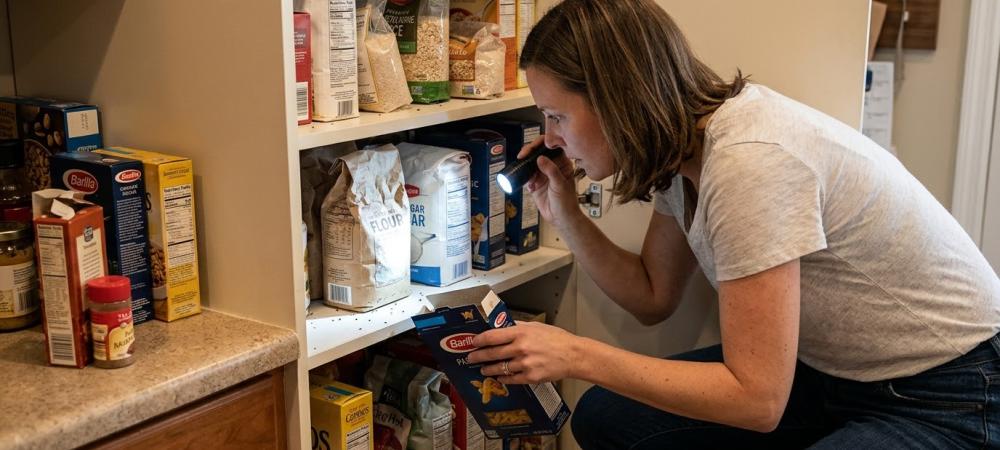
How do I find where pantry bugs are coming from in my kitchen?
Check dry goods, pet food, and birdseed for insects, larvae, or webbing inside packages. For homes in Palm Beach County and the Treasure Coast Area, insects on shelves alone do not pinpoint the source. Multiple products may be infested; continued sightings after removing one item may indicate another source or a different insect requiring identification.
What Signs Help Identify the Source of Pantry Bugs?
Evidence inside a stored product provides a clearer connection to the source than an insect seen walking across a shelf. Look for bugs within the food, larvae among the contents, or webbing inside the package. These findings point to an affected item.
The location where you first notice an insect can guide your search, but it does not establish which product is responsible. Pantry insects can leave infested food and appear elsewhere in the kitchen. A bug beside a bag of flour does not automatically mean that particular bag is the source.
Focus on what you find inside packages rather than assuming the nearest product is infested. It also helps to distinguish between an insect found directly in food and one seen nearby. That distinction gives a pest control professional more useful information when evaluating the problem.
Which Stored Products Should You Check for Pantry Pests?
Check beyond the package closest to the insects. Pantry pests can affect several stored products, so finding evidence in one item should not end the search.
Products worth examining include:
- Dry goods: Flour, rice, pasta, cereal, and similar stored foods.
- Other pantry foods: Nuts, dried fruit, spices, and seeds.
- Dry pet food: Including supplies stored away from the main pantry.
- Birdseed: Especially when it is kept in a nearby cupboard or storage area.
Review both opened and unopened packages. An unopened package should not be ruled out simply because it has never been used. Pantry insects may enter through packaging seams or infest a product before it reaches your kitchen.
Examine each susceptible product individually. Check the contents for insects, larvae, or webbing, rather than relying only on the condition of the outer packaging. A package that looks ordinary from the outside may still contain evidence worth investigating.
The goal is to connect insect activity with a specific stored product while checking whether other items are also affected.
Does Finding One Infested Package Mean You Found the Only Source?
A common misconception is that removing the first infested item resolves the entire source problem. Pantry pests can affect more than one product, so one discovery does not establish that everything else is clear.
For example, insects found inside cereal do not rule out a separate affected package of pet food. Each finding needs to be considered on its own.
Likewise, insects remaining on a shelf do not prove that the shelf itself is the source. Their presence shows activity, but the connection to stored food still needs investigation. Checking other susceptible products helps avoid overlooking a second source.
What Should You Do if Pantry Bugs Keep Appearing?
Continued sightings after removing one affected product call for another look at the evidence. There may be another infested item, or the insects may require a different identification.
Record where you see activity and whether you find insects inside food packages. Note which products contained larvae or webbing and which items have already been removed. These observations help explain what has been found and what remains uncertain.
Proper identification matters because not every small beetle or moth indoors is a pantry pest. When there is no clear connection to stored food, identification helps determine whether searching pantry products is the appropriate next step.
FAQ
Can pantry bugs come from unopened packages?
Yes. Unopened packages can contain pantry pests. Insects may enter through seams or affect a product before it reaches your home, so unopened items should remain part of the inspection.
Should I check pet food and birdseed?
Yes. Dry pet food and birdseed can be affected by pantry pests. Check these supplies even when they are stored outside the kitchen or away from other pantry products.
Does webbing inside food packaging indicate a problem?
Webbing inside a food package can indicate pantry pest activity. Examine the contents for larvae or insects, and check other susceptible products rather than assuming only one item is affected.
Why is identifying the insect important?
Identification helps establish whether the insect is associated with stored food. Continued sightings without a clear food source may involve another insect, which can change the appropriate next step.
How do I find where pantry bugs are coming from in my kitchen?
Check dry goods, pet food, and birdseed for insects, larvae, or webbing inside packages. For homes in Palm Beach County and the Treasure Coast Area, insects on shelves alone do not pinpoint the source. Multiple products may be infested; continued sightings after removing one item may indicate another source or a different insect requiring identification.
Conclusion
Find the source of pantry bugs by checking stored products for insects, larvae, or webbing. Inspect multiple susceptible items, and seek identification when continued activity has no clear connection to food.
For help evaluating pantry insect activity in Palm Beach County and the Treasure Coast Area, contact Hulett Environmental Services to discuss your observations and appropriate pest control next steps.