
What Causes Tiny Holes and Powder in Wood Furniture?
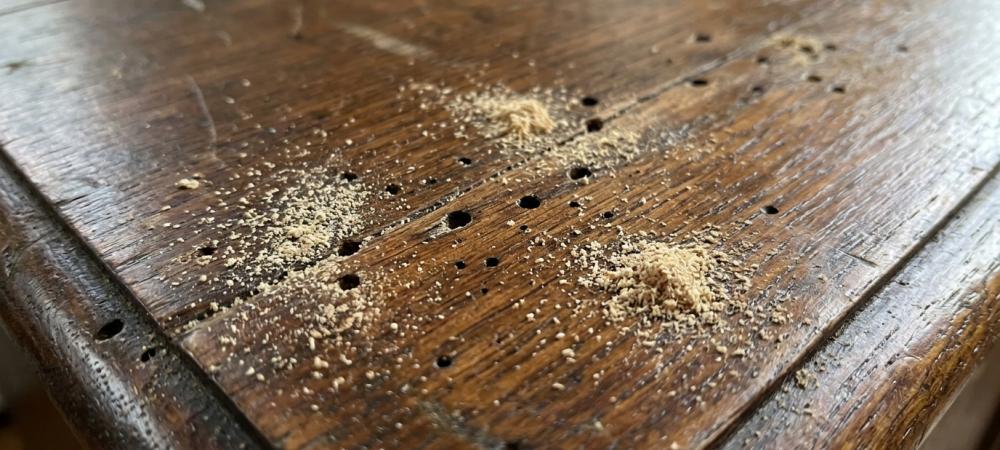
What causes tiny holes and powder in wood furniture?
Tiny round holes with flour-like powder may indicate powderpost beetles, while drywood termites can leave holes and distinct pellets. Holes alone cannot confirm the pest or ongoing activity. For furniture in Palm Beach County and the Treasure Coast Area, professional inspection can identify the insect and assess current activity before determining whether treatment is needed.
What Do Powderpost Beetle Holes and Powder Look Like?
Powderpost beetles can leave small, round holes in wood furniture along with fine debris that resembles flour. The combination of holes and powder provides a more useful clue than either sign considered separately.
The powder’s texture matters because different wood-damaging insects leave different evidence. Fine material associated with powderpost beetles should not automatically be grouped together with the distinct pellets associated with drywood termites.
When describing the problem to a pest control professional, useful observations include:
- Hole appearance: Whether the openings look small and round.
- Debris texture: Whether the material looks powdery or consists of individual pellets.
- Debris location: Whether it appears beneath the furniture or around particular openings.
- Affected areas: Whether the evidence is concentrated in one section or appears in several places.
These details help communicate what you have found, but they do not establish a diagnosis. A piece of furniture with tiny holes deserves an evaluation of the surrounding evidence before anyone decides which insect is responsible.
How Does Drywood Termite Debris Differ From Beetle Powder?
Drywood termites can also leave holes in wood and expel pellets. Their debris differs from the fine, flour-like material that can point to powderpost beetles. This distinction helps explain why describing every accumulation as “wood dust” can make identification less clear.
A powdery deposit and a collection of distinct pellets may look similar from a distance. Closer examination of the material helps a professional evaluate which explanation fits the evidence.
For example, small holes in a wooden cabinet accompanied by fine powder may suggest powderpost beetles. Similar openings accompanied by individual pellets raise a different possibility. Neither example confirms the pest without inspection.
The important point is that holes and debris should be evaluated together. Identifying only the shape of an opening, while overlooking the material nearby, leaves part of the question unanswered. Likewise, finding debris beneath furniture does not by itself establish which opening or wooden component it came from.
Do Tiny Holes Mean the Furniture Has an Active Infestation?
A common misconception is that visible holes prove insects are still active inside the furniture. Holes alone cannot establish current activity, even when their appearance suggests previous insect damage.
Two separate questions need answers:
- Which insect caused the evidence?
- Is that insect still active in the item?
Identifying a likely pest does not automatically answer the second question. The furniture needs to be evaluated for current activity before treatment decisions are made.
This distinction also prevents assumptions based on the number of visible holes. Several openings may look concerning, but their presence does not independently confirm an ongoing infestation. Professional assessment helps separate evidence of damage from evidence that treatment is currently warranted.
Why Should Furniture Be Inspected Before Treatment?
Inspection connects the visible signs with a decision about the affected item. The purpose is to identify the insect, evaluate current activity, and determine whether furniture treatment is needed.
For homeowners in Palm Beach County and the Treasure Coast Area, the useful starting point is an accurate description of the holes and debris. Explain what the material looks like and where it appears rather than presenting an assumed pest identification.
A professional can evaluate those observations alongside the furniture itself. That assessment provides a stronger basis for recommendations than selecting treatment solely because holes are present.
Questions to discuss include what pest the evidence supports, whether current activity has been identified, and why a particular treatment is recommended. The findings should guide the next step.
FAQ
Does flour-like powder always mean powderpost beetles?
Fine, flour-like powder with small round holes can point to powderpost beetles. However, appearance alone does not confirm the insect or establish whether it remains active.
Can drywood termites leave holes in furniture?
Yes. Drywood termites can leave holes and expel distinct pellets. Those pellets differ from flour-like beetle powder, making debris an important part of the inspection.
Do holes alone prove insects are still present?
No. Holes alone cannot confirm an active infestation. Professional inspection helps determine which insect caused the evidence and whether current activity warrants treatment.
Does furniture with insect holes always need treatment?
Treatment should depend on the identified insect and current activity. Have the item inspected before deciding whether treatment is needed or choosing a treatment approach.
How often should I change my furnace filter?
It depends on the filter, but check it monthly and change it at least every three months. ENERGY STAR recommends inspecting filters monthly during heavy-use seasons. Standard 1-inch filters typically need replacing every one to three months, while thicker 4- to 5-inch media filters can last six to twelve months.
Conclusion
Tiny holes with flour-like powder may indicate powderpost beetles, while holes with distinct pellets may suggest drywood termites. Inspection is needed to identify the insect and assess current activity.