
When Should a Wasp Nest Near a Doorway Be Professionally Treated?
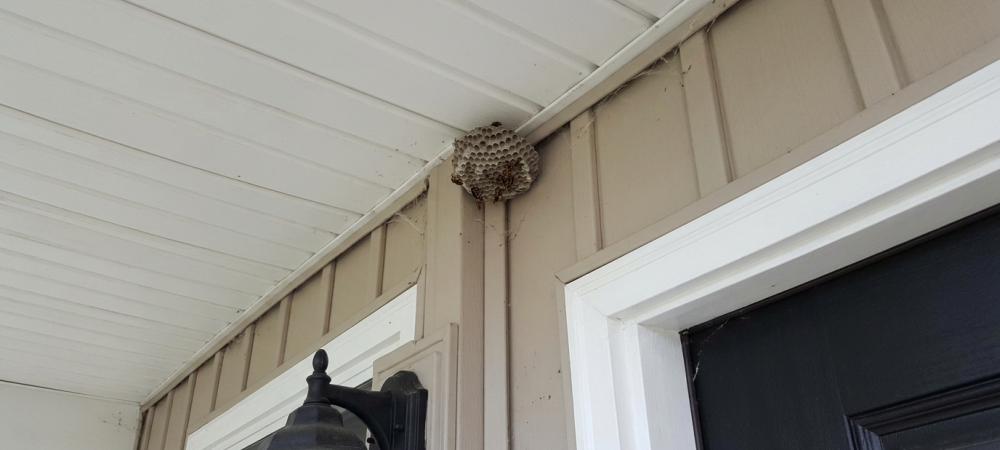
When should a wasp nest near a doorway be professionally treated?
A wasp nest near a doorway should be professionally assessed when people regularly pass close to active wasps, particularly if children, pets, or someone with a known sting allergy uses the entrance. Repeated wasp movement into doorframes, soffits, or wall openings may indicate a concealed nest that requires careful identification and inspection.
When Does a Wasp Nest Near an Entrance Become a Concern?
The location of a wasp nest is an important factor in deciding whether professional treatment is appropriate.
A nest located near a frequently used entrance creates a different situation from one in an isolated area where people rarely pass.
Doorways are places where residents, visitors, delivery personnel, and pets may move throughout the day.
When an active nest is close to that activity, people may unintentionally approach or disturb the insects.
Wasps can respond defensively when their nest is threatened. The potential for an encounter increases when people must repeatedly travel through the immediate nesting area.
Several circumstances warrant particular attention:
- Wasps are repeatedly flying near the doorway.
- The nest is close to the path people use to enter or leave.
- Children or pets regularly use the entrance.
- Someone using the doorway has a known sting allergy.
- Wasps are entering a gap in the doorframe, soffit, or wall.
These conditions do not all require the same treatment, but they provide reasons to arrange a professional inspection.
The goal is to identify the insects, evaluate the nest location, and determine the safest appropriate response.
How Can You Recognize a Hidden Wasp Nest?
Not every wasp nest is visible from outside a building.
Some wasps may establish nesting sites in sheltered structural spaces, including openings around doorframes, soffits, or wall cavities.
Repeated movement into a particular gap can be an important clue.
For example, if wasps consistently approach the same opening above an entrance and disappear inside, that pattern may indicate a concealed nesting area.
However, seeing one insect enter a gap does not conclusively establish that a nest is present.
Observe from a safe distance rather than approaching the opening to investigate.
Avoid inserting objects into the gap, removing building materials, or sealing an opening while insects may still be using it.
Disturbing a concealed nesting area can create additional exposure to defensive insects.
A pest professional can evaluate the flight activity, identify the insects, and determine whether the opening is associated with a nest.
This inspection is particularly useful when the suspected nesting area cannot be seen directly.
Why Does Professional Wasp Identification Matter?
The word "wasp" is often used broadly for several types of stinging insects.
Different insects have different nesting habits and may require different management approaches.
An insect flying near a doorway is not automatically evidence of an established wasp colony.
Some insects may be searching for food or shelter, while others may be traveling to and from a nearby nest.
Proper identification helps distinguish these situations.
It also helps determine whether the insects are using an exposed nest or a concealed structural space.
Treatment decisions should follow that identification rather than being based solely on the presence of flying insects.
Attempting to treat an unidentified nest can create unnecessary risks, particularly when the insects are located near a door that people need to use.
Professional assessment helps establish whether treatment is warranted and how the location should be managed.
What Should Palm Beach County and the Treasure Coast Area Residents Do?
For households in Palm Beach County and the Treasure Coast Area, an active wasp nest near a regularly used doorway deserves careful consideration because the entrance may be difficult to avoid.
If wasps are repeatedly traveling through the area, minimize activity near the suspected nest until it has been assessed.
Where another safe entrance is available, using it temporarily may reduce unnecessary encounters.
Keep children and pets away from the immediate nesting area.
Do not attempt to knock down a nest, strike the surrounding structure, or disturb insects entering a wall opening.
If the nest is concealed, avoid sealing the suspected entrance before professional evaluation.
It is useful to note where the insects are traveling and whether their activity appears concentrated around a particular structural opening.
These observations can help the inspector without requiring anyone to approach the nest.
In Palm Beach County and the Treasure Coast Area, residents can request professional pest control guidance when wasp activity makes normal use of an entrance concerning.
Common Myth: A Small Wasp Nest Near a Door Is Always Safe to Remove Yourself
One misconception is that a nest is safe to handle simply because it appears small.
Nest size alone does not establish how insects will respond when disturbed.
The nest's location, the type of insect, the amount of activity, and the proximity of people are all relevant considerations.
A concealed nest presents additional uncertainty because the visible opening may not reveal the actual nesting area.
Another misconception is that sealing the opening immediately will solve the problem.
When insects are using a structural cavity, blocking an opening without identifying the nest may complicate the situation.
Professional inspection provides a more informed basis for deciding what should happen next.
FAQ
Should I avoid using a doorway with an active wasp nest nearby?
If wasps are repeatedly flying close to the entrance, reduce activity in that area when possible. Use another safe entrance until the nesting location has been evaluated.
Can wasps build nests inside doorframes or walls?
Yes. Some wasps use sheltered structural spaces. Repeated insect movement into the same opening may indicate a concealed nest requiring professional inspection.
Is a small wasp nest safe to remove without professional help?
Not necessarily. A nest's size does not establish how insects will respond to disturbance. Its location and the species involved are important considerations.
When is professional wasp treatment especially important?
Professional assessment is particularly important when active wasps are close to a frequently used entrance or when children, pets, or someone with a sting allergy may encounter them.
When should a wasp nest near a doorway be professionally treated?
A wasp nest near a frequently used doorway should be professionally assessed when people must pass close to active wasps, especially children, pets, or anyone with a sting allergy. In Palm Beach County and the Treasure Coast Area, repeated wasp traffic into a doorframe or wall opening may indicate a hidden nest requiring inspection.
Conclusion
A wasp nest near a doorway should be professionally assessed when its location creates repeated opportunities for people or pets to encounter active insects. Hidden nests, frequent wasp traffic, and known sting allergies make careful identification and evaluation especially important.