Bug In McDonald’s Hash Browns: Man Claims To Find Deep-Fried Insect (Mealbreakers)

Bug In McDonald’s Hash Browns: Man Claims To Find Deep-Fried Insect (Mealbreakers)

via Huffington Post

Mealbreaker (n.): a nasty, non-edible surprise found in food while it is being eaten; often lawsuit-provoking, sometimes fabricated, always disgusting.

Reddit user LinkBoyJT posted an image Wednesday that might make your skin crawl. After ordering a McDonald’s hash brown and eating most of it, he says he was startled to find what he claims was a deep-fried insect stuck to the bottom half.

The text accompanying the image — which is pretty gross, by the way — reads “I was eating a hash brown from McDonald’s on the way home when I felt something on the bottom… ”

The user doesn’t disclose what type of insect it is, but it appears to be some sort of cockroach or moth. Late Wednesday night, he posted an update:

I took the thing and showed it to the manager and she marked my receipt so I could get the same meal for free the next time I come in for breakfast. She didn’t really seem all that concerned

This isn’t the first time bugs have allegedly been found in McDonald’s food. In 2010, an Ontario man discovered at least 50 dead ants in his breakfast burrito. Last year, a Miami family found insect parts in near every dish they ordered, starting with an order of pancakes, and an Australian patron found a cockroach stuck to the inside of an iced coffee.

Posted in Bug In McDonald's Hash Browns: Man Claims To Find Deep-Fried Insect (Mealbreakers) | Tagged | Leave a comment

Why Are Lovebugs Flying Around My Car?

Why Are Lovebugs Flying Around My Car?

Ahhhh… the lovebug! If you live in Florida or in the Southeast, you are currently being inundated by swarms of lovebugs flying around your vehicle. These insects often end up splatted on your windshield and front grill. Many of the cars coming off the highway are covered in insect gunk. You may be thinking, “Do these critters have a death wish?” Well, there is a reason for everything… read on.

Let’s step back a moment and learn about these critters. The lovebug (Plecia nearctica Hardy) is a species of fly that happens to flutter about as a male and female attached together. Both sexes are a dull black with a red blotch just behind the head. What are they doing flying around in tandem? Essentially the male has copulated with the female and remains attached to keep other males away. The female is looking for a place to lay her eggs, and she lays about 100-300 eggs in the soil under decaying organic matter (e.g., rotting leaves and grasses). After hatching out, the larvae eat the decaying vegetation. Lovebugs are so numerous because conditions are perfect in the Southeast — essentially warm, wet weather. Plus, lovebugs are reported to be bitter and do not have many natural enemies. The red patch behind the head may be a warning coloration.

But why are they attracted to roads and vehicles? As it turns out — tests have shown that lovebugs are attracted to automobile exhaust that has been irradiated with UV light (i.e., sunlight). Why? It has been proposed that the chemicals in car exhaust, aldehydes and formaldehydes, are similar to the chemicals released by decaying organic matter. Even heat is an attractant for lovebugs and heat radiating off asphalt may be attracting these insects. Thus, the lovebugs are not stupid, per se. Roads are warm and have accumulated an abundance of automobile exhaust, mimicking areas that are appropriate for lovebugs to lay their eggs. Lovebugs are tricked into swarming along roads and around vehicles!

The lovebugs have two major eruptions within a year. The first one is late April/May, and lasts about 4 weeks. These adults lay their eggs, the larvae grow, and the next generation of adults emerge August/September. In turn, these adults lay their eggs, the larvae grow much more slowly over the winter, and the adults emerge April/May.

There have been claims that the lovebug gunk, when left on the car, will etch the paint on a car. The gunk that is left on the car does become slightly acidic and if left on for an extended time, it is difficult to remove and may damage the finish. The best solution is to wax the car before taking it out during lovebug season and to remove the splats within 24 hours.

And for those of you in Florida, University of Florida researchers did not genetically engineer lovebugs to kill mosquitoes and researchers did not bring them into Florida. This lovebug species migrated from Louisiana and reached Florida by 1949.

And how can you tell one lovebug splat from another insect? There is a book out there on how to identify that “Gunk on Your Car.” Also, a researcher has discovered how to take the DNA out of the gunk and identify the insects that have splatted on the car. Interesting – no?

Lovebugs are here to stay. Just give your car a good wax job before the onset of lovebug season and the splats on your car will come off relatively easy. I for one marvel at what Mother Nature produces — and hey — these little buggers are actually cute if you take time to look at them.

Posted in Why Are Lovebugs Flying Around My Car? | Tagged | Leave a comment

Common lawn insect pests

Common lawn insect pests

Even though mole crickets may injure any of the lawn grasses we grow in Florida, Bermuda, bahia and centipede are most severely damaged. Mole crickets are active in North Florida spring through fall. The best window of opportunity to control them is June and July.

Soap flush is a technique to check for mole crickets. Mix 2 ounces of liquid dishwashing soap in 2 gallons of water and apply with a sprinkling can to 4 square feet of turf in several areas where mole crickets are suspected. If two to four mole crickets surface within three minutes, then a treatment is probably needed.

Chinch bugs only damage St. Augustinegrass. Chinch bugs are active spring through fall. They are usually found in open sunny areas of the yard during warmer summer weather, particularly if it’s dry.

Inspect a St. Augustine lawn weekly during spring, summer and fall. Look for areas that quickly turn yellow and then straw brown. Part grass at the margin of the yellowed areas and closely examine the soil surface for tiny insects. Immature chinch bugs are pink to bright red and are about the size of a pinhead. Adults are black with white wings and about one-fifth inch long.

Sod webworms’ favor Bermudagrass. They will attack St. Augustinegrass and centipedegrass. They usually are not in North Florida until August and continue to feed on lawns until frost.

The small green caterpillars are no larger than three-quarters inch. They mostly feed at night and are curled up on the soil surface during the day. The grass blades will be notched from their chewing and heavily infested turf may appear mowed.

Spittlebugs attack all turfgrass species but centipedegrass is their favorite. The first generation of adult spittlebugs is abundant in June and the peak population is usually in August to early September.

An early sign of spittlebug activity are masses of white, frothy spittle found in the turf. Each piece of spittle contains a single larva. Infested turf turns yellow and eventually brown. Damage usually first appears in shady areas. As the population builds, the one-quarter inch-long adults are abundant. As you walk through or mow an infested area, numerous adult spittlebugs appear to hop when disturbed (actually, they fly for a short distance). The adults are black with two orange transverse stripes across their wings.

For lawn insect control options, contact the UF/IFAS Extension Office in your county or contact a reputable and licensed pest control company.

Contact Larry Williams at 689-5850 or 689-5050; or e-mail lwilliams@co.okaloosa.fl.us. He is the Extension horticulture agent with the Okaloosa County Cooperative Extension Service, University of Florida.

Learn more about lawn pests here: http://www.bugs.com/bugs_database/lawn_pests.asp
Posted in Uncategorized | Leave a comment

Crews are battling a new termite species in South Florida this week

Posted in Crews are battling a new termite species in South Florida this week, Termite Control, Termite Inspection | Tagged , , , , , , , , | Leave a comment

Tips to Help Prevent West Nile Virus

Posted in Tips to Help Prevent West Nile Virus | Tagged | Leave a comment

Dangerous Termite Turns Up in South Florida

Sun-Sentinel.com: Dangerous Termite Turns Up in South Florida

A uniquely dangerous termite that tunnels up the sides of houses has turned up in South Florida, leading agriculture officials to organize a campaign to wipe it out before it can spread.

The Nasutitermes corniger termite, which is native to the Caribbean, lives above ground, builds brown tubes up the outside walls of houses and shows a particular taste for hardwood. The insect’s above-ground habitat means it would avoid direct competition with native, subterranean termites and raise the total number of termites that could live in the region by 25 to 30 percent, said Rudolf H. Scheffrahn, professor of entomology at the University of Florida.

“They forage on the open floor, which is something you don’t see unless you live in the tropics,” he said. “They love to eat hardwoods. They ate the handles off garden implements, rakes and hoes – turned them into shredded wheat. If this thing really keeps going, it’s going to be a problem for tropical Florida, from West Palm Beach to the Keys.”

A dozen field workers from the Florida Department of Agriculture on Tuesday will blitz neighborhoods in Dania Beach, the only city so far in which the termites have been found, treating 42 properties that harbor the insects. The termite’s beach ball-sized nests, made of termite excrement and constructed above ground, will be sprayed, as well as the foraging tubes running up trees and houses.

On Southwest 25th Avenue, where the termites have been found in several houses and trees, Martha Rosen said she and her husband first noticed strange dark lines going up the sides of their house. Soon they realized what was causing them.

“They got into the tool shed and ate our stack of firewood,” she said. “We went to pick it up and there was no wood left. They’re very aggressive. My trees look like they’re almost dead. ”

The species first showed up in Dania Beach in 2001. Aggressive spraying was thought to have eradicated it, but then it turned up last summer. They are thought to have originally arrived on wooden pallets brought from the Caribbean to a nearby marina, said Michael Page, chief of the Bureau of Entomology and Pest Control for the Florida Department of Agriculture.

Mark Fagan, spokesman for the state agriculture department, said the termite was found in the walls of the International Game Fish Association, just west of Interstate 95 and south of Griffin Road. Since then, he said, they have been found on 42 properties in neighborhoods for about a square mile around that site.

Fagan said the eradication work will take about four days.

The termites are ant-like in appearance. Unlike the 20 or so local species of termite, they can be seen crawling along the ground. If you think you have them on your property, call the Florida Department of Agriculture hotline at 888-397-1517.

“We’re trying to prevent another termite from being established,” Fagan said. “We’ve got plenty of termites in Florida.”

A single nest could harbor 1 million or more termites, Scheffrahn said. With the current infestation of 100 to 120 colonies, there are already more than 100 million of the termites in the area, he said.

He said “time is of the essence,” because any day the winged termites could take to the air to establish new nests.

Posted in Dangerous Termite Turns Up in South Florida | Tagged , , , | Leave a comment

Nasutitermes corniger, a dangerous termite, arrives in South Florida

Posted in arrives in South Florida | Tagged , , | Leave a comment

A Virus May Make Mosquitoes Even Thirstier for Human Blood

A Virus May Make Mosquitoes Even Thirstier for Human Blood

Florida Pet Control

By

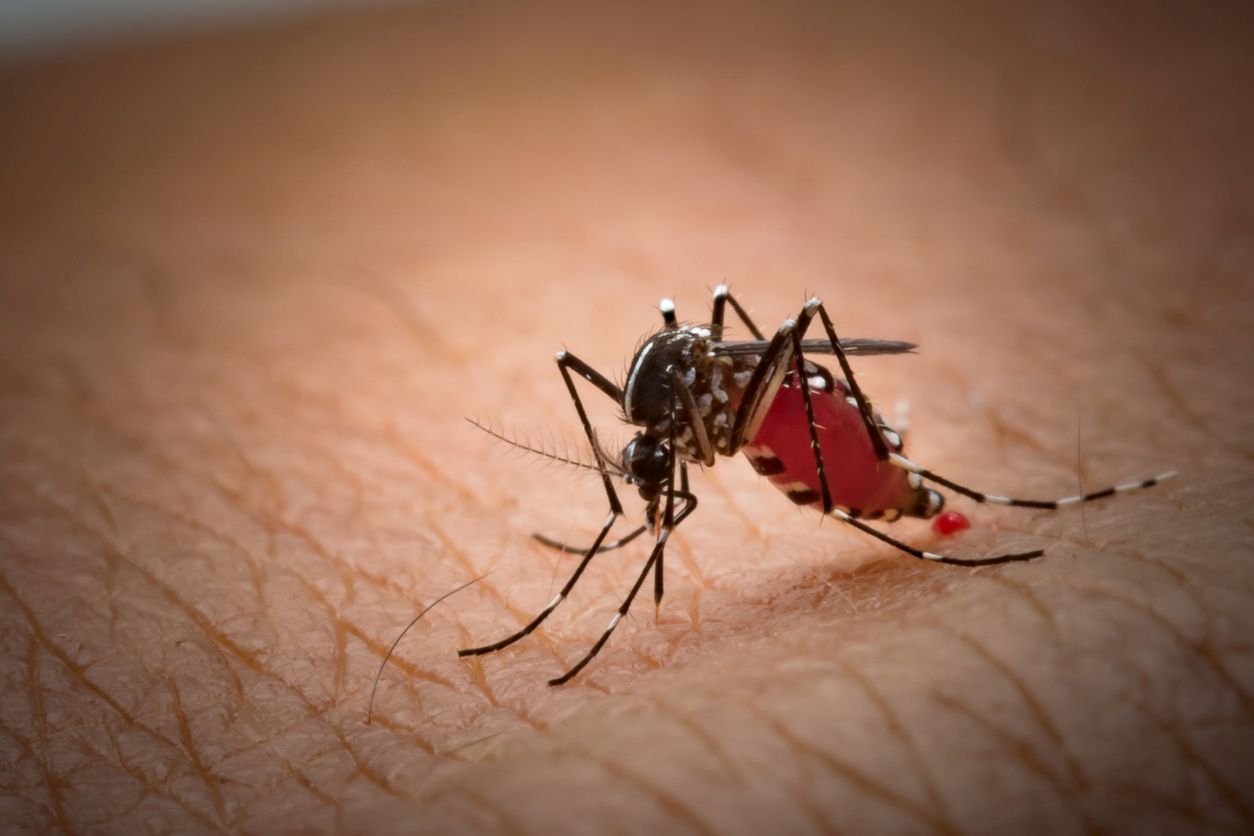
The dengue virus may actually make mosquitoes thirstier for human blood, new research has found.

In a study published last week in PLoS Pathogens, mosquito experts at the Johns Hopkins Bloomberg School of Public Health found that the dengue virus altered the production of proteins made by 147 different genes.

Some changes appeared to make the antennae more sensitive to odors — making them better at hunting humans, the virus’s only known mammalian host. Other changes in salivary gland genes appeared to make it easier for the virus to get into a mosquito’s saliva, ready for injection.

Those tests were done on a genome microarray — snippets of the DNA of Aedes aegypti mosquitoes coating a glass slide. But when the researchers tried to replicate the results in live mosquitoes, they could not prove they were hungrier.

“Since we can’t infect humans for our experiments, we think it’s a problem with the model,” said George Dimopoulos, lead author of the new study.

In his laboratory model, mosquitoes had to drink infected blood from a balloonlike membrane and then were offered mice to bite.

“Mosquitoes will feed on other animals if they get hungry, but it isn’t their favorite dish,” Dr. Dimopoulos said.

Up to 100 million people are infected with dengue each year; it is known as “breakbone fever” for the joint pain it causes. Up to 15,000 die of it annually, most of them children, according to the World Health Organization. There is no vaccine or cure.

Posted in A Virus May Make Mosquitoes Even Thirstier for Human Blood | Tagged , , , , , , , , , , , , , | Leave a comment

Florida Ant Control ~ Hulett Environmental Services Healthy Home Program

Posted in Florida Ant Control ~ Hulett Environmental Services Healthy Home Program | Tagged , , , , , , | Leave a comment

Follow Hulett on your favorite social sites!

Follow Hulett on your favorite social sites!

Posted in Follow Hulett on your favorite social sites! | Tagged , , , , , , , , | Leave a comment