
The Most Common Ant Species in South Florida and How to Identify Them
Enter your zip and we'll take it from there.
South Florida’s warm, humid climate creates the perfect environment for dozens of ant species—but only a handful regularly invade homes. When ants start trailing across the kitchen, nesting in wall voids, or building mounds in the lawn, correct identification is the key to effective ant control. Each species behaves differently, feeds on different materials, nests in different places, and responds to different control products—including baits, residual treatments, and crack-and-crevice applications.
Below, our experts break down the most common ants in South Florida, how to recognize them, and why professional identification from Hulett Environmental Services ensures targeted, ecofriendly solutions.
Why Ant Identification Matters in South Florida
Many homeowners search for “sugar ants” or “tiny ants in my kitchen,” but in reality, they’re dealing with one of several common nuisance species—most often Ghost Ants or White-Footed Ants. Even though they look similar to the untrained eye, they require very different treatment strategies.
Correct ant identification matters because:
- Different species respond differently to bait.
- Some require non-repellent treatments instead of repellents.
- Nesting sites vary—some colonize attics and wall voids, others nest outdoors in mulch or lawns.
- Certain species, like fire ants, require lawn pest control, while others need indoor crack-and-crevice treatments.
- Ecofriendly, green pest control programs depend on correctly targeting each species’ biology and behavior.
Misidentifying ants wastes time, money, and product—and allows the infestation to grow.
Ghost Ants: Tiny Household Invaders
Ghost ants are among the most common household ants in Florida and a leading cause of calls for DIY treatments that fail.
How to Identify Ghost Ants:
- Extremely small (1.3–1.5 mm)
- Dark head and thorax with pale, almost translucent legs and abdomen
- Fast-moving, forming long trailing lines
- Often found in kitchens, bathrooms, and around moisture
Where They Nest:
- Inside wall voids, behind baseboards, under sinks
- Outdoors in mulch, potted plants, and soil
Because their colonies are widely distributed and can include hundreds of budding satellite nests, ghost ants respond best to non-repellent baits and liquids—not sprays that simply scatter them. Hulett technicians use targeted baits and eco-friendly treatments to trace and eliminate colonies at the source.
Sugar Ants and Other Common Nuisance Species
In South Florida, “sugar ants” isn’t a real species—it’s a nickname homeowners use to describe small, trailing ants inside the kitchen. What they’re actually seeing are usually:
White-Footed Ants
Identification:
- Dark body with pale yellowish legs (the “white feet”)
- Slightly larger than ghost ants
- Extremely large colonies (up to millions)
Behavior:
- Prefer sweets and are attracted to kitchens, pantries, and moisture
- Common around soffits, attics with moisture issues, and shrubs touching the home
White-Footed Ants do not respond well to protein baits, so sugar-based baits or non-repellent treatments are required.
Other Small Nuisance Ants May Include:
- Big-Headed Ants – common in the soil; workers have distinctive large heads; often invade slabs and patios.
- Argentine Ants – heavy trailing, extremely large colonies.
- Crazy Ants – erratic, rapid movement; prefer moisture-rich environments.
“Fire Ants” instructions
Because these species all look similar, professional identification is essential to choosing the correct bait or liquid treatment.
Fire Ants and Their Distinctive Mounds
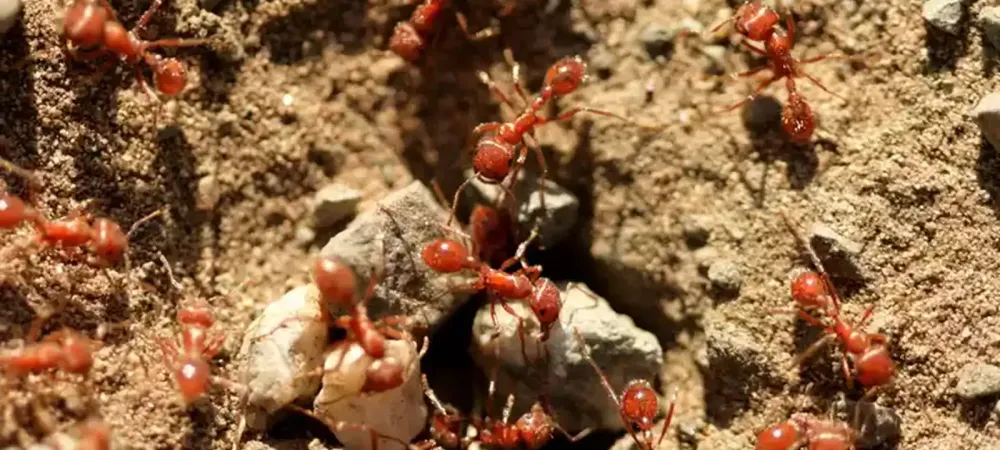
Fire ants are well-known in Florida lawns—and for good reason. Their painful sting can cause welts, allergic reactions, and create hazards for children and pets.
How to Identify Fire Ants:
- Reddish-brown coloration
- Highly aggressive
- Large dome-shaped mounds
- Crawl rapidly when disturbed
Where They Live:
- Outdoors only—fire ants rarely invade structures
- Nest in turf, fields, parks, and landscaped lawns
Because fire ants are a lawn pest, they are controlled through professional lawn pest control treatments, including broadcast granules, baiting programs, and mound drenches that reduce colonies efficiently and effectively.
Carpenter Ants and Signs of Structural Nesting
Carpenter ants are one of the most misidentified ants in Florida, especially because homeowners worry they consume wood like termites. However, carpenter ants in South Florida do NOT eat wood—they nest in water-damaged, softened, or decayed wood.
How to Identify Carpenter Ants:
- Large ants (6–12 mm)
- Common coloration: reddish-orange head with a black abdomen (Florida carpenter ant)
- Active at night, often spotted around patios and window frames
Where They Nest:
- Attics with old roof leaks
- Soft fascia or soffits with wood rot
- Moist window sills, door frames, or wall voids
- Tree hollows and wooden fences
Carpenter ants often have satellite nests, so finding their primary nest requires expertise. Treatment involves non-repellent liquids, baits, and crack-and-crevice applications specifically placed where ants are trailing or nesting.
How to Spot Early Signs of Florida Ant Infestations
Homeowners often notice ants long after colonies have already expanded. Early signs include:
- Tiny ants trailing along baseboards or countertops
- Ants appearing after rain or plumbing leaks
- Random winged ants near doors or windows
- Ant activity near exterior wood sources
- Large numbers of ants around vegetation touching the home
Catching infestations early makes treatment faster, easier, and more ecofriendly.
Partner with Hulett for Expert Ant Identification and Control
With so many types of ants in Florida, accurate identification is critical to choosing the right treatment—especially in a region with species that resist common baits or reproduce rapidly.
Hulett Environmental Services offers:
- Free, thorough inspections
- Precise species identification
- Targeted treatment plans tailored to ant biology
- Ecofriendly and green pest control options
- Interior crack-and-crevice treatments
- Advanced baiting strategies based on species behavior
- Lawn pest control for fire ants
- Long-term prevention plans to keep ants out for good
If you’re seeing ants in your kitchen, bathrooms, attic, or lawn, trust South Florida’s local ant experts.
Call Hulett today for a free inspection and customized ant control plan—Just Call Hulett!