

The Winter Pest Prevention Checklist for Commercial Property Owners
The risk of infestation doesn’t go away when the temperature falls. While high-visibility pests like flies and wasps are more common in the summer, winter pest infestations are harder to spot. Rats and mice may sneak indoors through openings in your exterior, and cockroaches can form entire colonies around your plumbing without ever being noticed.
To keep your property protected this winter, let Hulett Environmental Services guide you through all the information you need to know about commercial pest prevention in the winter. We’ll go over the most vulnerable areas in commercial properties, the factors that lure pests inside, and how routine pest management services can keep you protected throughout the year.
Our Top Three Winter Pest Prevention Tips
Winter pests are opportunists, and all it takes is a heat source and a small opening to put your facility’s health at risk. To harden your property against infestations before they start, follow Hulett Environmental Services’ winter pest control checklist.
1. Exterior Gap Sealing and the Dime Rule

The simplest and most effective way to keep pests out is to reduce the number of entry points around your property. This is especially important for commercial winter rodent prevention in offices, warehouses, stores, and restaurants with high foot traffic.
Rodents can squeeze through tiny gaps. Their bodies are flexible and compress easily, allowing them to fit through spaces that look far too small at first glance. Mice can enter through an opening as small as a dime, while rats only need a gap the size of a quarter. And because of this, contractors and home inspectors rely on what’s commonly called the dime rule when evaluating buildings.
If there’s a gap in your structure bigger than a dime or your thumbnail, seal it. This rule applies indoors and along the exterior of your property. Outside, focus on three key areas. Start with utility penetrations, which include the gaps where AC lines, electrical conduits, and plumbing pass through the siding or foundation.
Moving inside, inspect any garage doors on your property, including loading docks and parking areas. Look closely for nibble marks near the corners, and always check the astragal—the rubber gasket at the bottom of the door—for cracks or separation that rodents and insects can use to get inside.
2. Attic Ventilation for Pest Control
Attic ventilation should be a top priority for any property, regardless of the size. A well-insulated and well-ventilated attic allows excess heat to escape during the summer while helping retain warmth in the occupied spaces below during the winter. Just as important, your attic needs to release moisture while preventing outside moisture from entering, since damp environments create conditions for pest infestations.
Your attic should pull cool air in through the soffit vents on the exterior of your property. To keep those vents functioning properly, install insulation baffles that create a clear airflow path and prevent insulation from blocking the openings. Remember that air movement through commercial attics also depends on mechanical support. Attic fans create the pressure difference needed to draw cooler air in and push warmer air out, making them far more effective than passive exhaust systems.
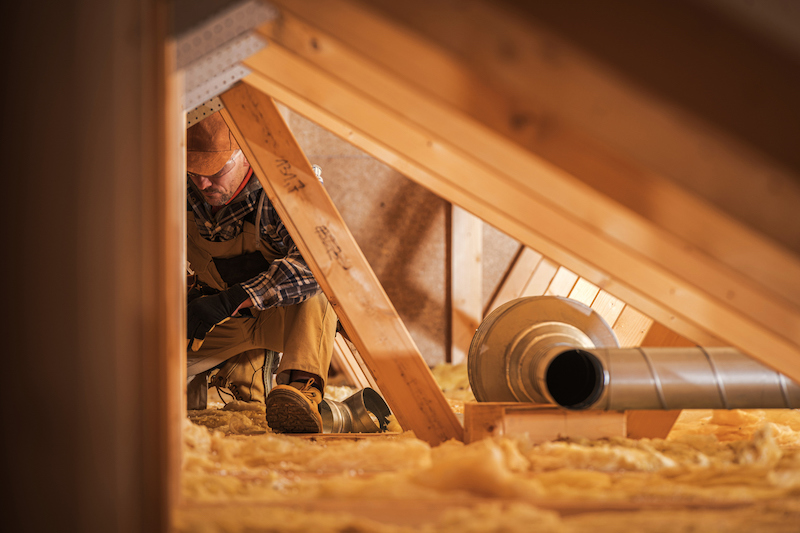
When choosing your attic fan, always remember to provide one square foot of ventilation for every 300 square feet of attic floor space. An underpowered or faulty fan can trap humidity inside that may attract pests.
If you have concerns about your attic ventilation system, take a close look at your nails and the insulation below them. If you see condensation, icing, or dripping marks on the insulation, it’s a clear sign that your attic is humid and at risk of infestation.
3. Supplies To Avoid Pests in Commercial Buildings in the Winter
A few simple additions to your property can meaningfully reduce the risk of pests throughout the year, especially in winter. As you plan your pest prevention strategy, consider installing:
- High-traffic air curtains. These help create a barrier of air in commercial bays or entrance doors that traps heat without blocking access. Importantly, they can also block flying pests from entering.
- HVAC air intake screening. These can be installed to prevent birds from nesting in the machinery and rodents from traveling through the ductwork.
- Floor drain maintenance. These may reveal access points or even an existing infestation. Pests often create breeding grounds in P-traps, allowing sewer flies and roaches to spread unnoticed.
Schedule Commercial Winter Pest Control With Hulett Environmental Services
Winter pest activity often starts quietly, long before visible signs appear. Regular inspections and seasonal treatments from Hulett Environmental Services help address pest issues early, keeping your commercial property shielded during colder months when pests are actively searching for warmth, shelter, and food sources.
To secure your commercial space, just call Hulett and schedule your pest control service today.
Latest Posts

March 18, 2026

March 18, 2026

February 28, 2026