
A Professional Guide to Types of Termites in Florida
Enter your zip and we'll take it from there.
Florida is a beautiful place to live. It is also one of the most termite-prone states in the country. Warm temperatures, high humidity, and year-round moisture create ideal conditions for these destructive pests, and pest control professionals will tell you there are two kinds of homes here. There are those that have had termites and those that will.
Knowing which type of termite you are dealing with is not just a matter of curiosity. It is the single most important factor in determining how your home gets treated and whether that treatment actually works. This guide breaks down the most common types of termites in Florida, what they look like, where they live, and the risks they pose to your home.
Subterranean Termites in Florida
What Do Subterranean Termites Look Like in Florida?
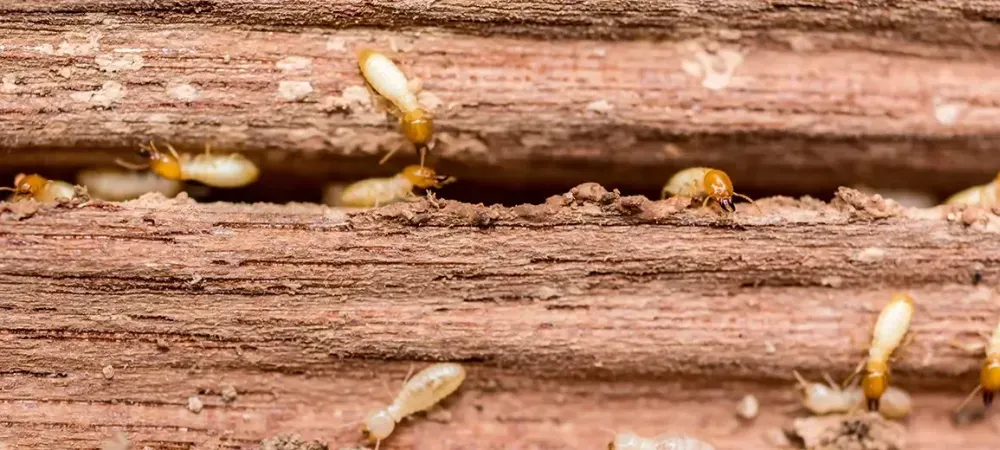
Subterranean termites are the most destructive in Florida and throughout the United States. Worker termites are small, soft bodied, and creamy white, measuring about 1/8 of an inch in length. Soldiers are slightly larger, with distinctive rectangular, yellowish-brown heads and strong mandibles. Swarmers, the reproductive termites, are dark brown to black with two pairs of equal-length wings.
One of the most reliable ways to spot a subterranean termite problem is the presence of mud tubes. These pencil-width tunnels, made from soil, wood particles, and termite saliva, run along foundations, walls, and floor joists. They allow the colony to travel above ground without exposure to the open air.
Where Termites Live and How They Behave
True to their name, subterranean termites live underground. A single colony can span up to an acre beneath a home, with workers tunneling up through the soil to reach wood sources. They require consistent moisture to survive, which is why they are so prevalent in South Florida’s humid climate.
Florida is home to several subterranean species, including the eastern subterranean termite and the highly aggressive Formosan termite. Their colonies can contain millions of individuals, and their ability to consume wood rapidly makes them one of the most destructive forces a South Florida homeowner can face.
The Risks Subterranean Termites Pose to Your Home
Subterranean termites attack wood from the inside out. That means significant structural damage can occur long before any visible signs appear on the surface. By the time a homeowner notices hollow-sounding wood, bubbling paint, or sagging floors, the infestation is usually well established.
Treatment Options for Subterranean Termites
Tent fumigation is not effective against subterranean termites because the colony lives in the soil, outside the structure being fumigated. Hulett’s treatment options include Hulett’s liquid defense termite treatment, which creates a protective barrier in the soil around the perimeter of your home, and Hulett’s termite baiting systems, which use an insect growth regulator to eliminate colonies at the source.
Drywood Termites in Florida
What Do Drywood Termites Look Like in Florida?
Drywood termites are the second major category found throughout Florida. Workers are pale and creamy white, similar in size to subterranean workers. Soldiers have large, reddish-brown heads with strong mandibles, and swarmers are typically reddish-brown to dark brown, measuring about 7/16 of an inch in length, including their wings.
The most telling sign of a drywood infestation is not the termite itself, but what it leaves behind. Termite frass, the tiny six-sided fecal pellets drywood termites kick out of their galleries, is often the first thing homeowners notice. These pellets resemble coffee grounds or coarse sawdust. According to the University of Florida IFAS Extension, frass color can range from beige to dark brown depending on the type of wood being consumed.
Where Drywood Termites Live and How They Behave
Unlike subterranean termites, drywood termites do not need soil contact or excess moisture to survive. They live entirely within the wood they are consuming. That means they can infest virtually any part of a home: attic framing, window trim, hardwood floors, door frames, and even wooden furniture.
Drywood termites spread primarily through swarming flights. Winged reproductives leave established colonies to start new ones, typically in late spring and summer. In South Florida, warm year-round temperatures mean termite swarms can occur at almost any time.
The Risks Drywood Termites Pose to Your Home
Drywood termite colonies are hidden inside the wood, making infestations notoriously difficult to detect until significant damage has already occurred. A mature colony can consume up to a cubic foot of wood over the course of a year. To make matters worse, multiple colonies can inhabit a single structure at the same time.
Treatment Options for Drywood Termites
Treatment depends heavily on the size and location of the infestation. Severe or widespread cases may require tent fumigation, in which a structure is enclosed and filled with a penetrating gas that reaches termites throughout the home. More localized infestations, however, may qualify for Hulett’s no-tent termite treatment. This less disruptive option involves injecting specialized products directly into termite galleries without requiring residents to leave their homes.
Dampwood Termites in Florida
Dampwood termites are the largest of the three main groups found in Florida, and they can be highly destructive to homes left untreated.
What Do Dampwood Termites Look Like in Florida?
Dampwood termite workers are cream-colored and noticeably bigger than those of the other species. Soldiers have large, reddish-brown heads with powerful jaws, and swarmers can reach up to 3/4 of an inch in length, with a brown coloring that often carries a reddish tinge.
Where Dampwood Termites Live and How They Behave
As the name suggests, dampwood termites are drawn to wood with high moisture content. They are most commonly found in decaying logs, tree stumps, wood piles, and structural wood that has been compromised by water damage, plumbing leaks, or roof failures. Unlike subterranean termites, they do not build mud tubes or maintain contact with the soil.
The Florida dampwood termite is the most common species in this category and is found throughout the state, particularly in coastal areas. Because they need consistently wet wood to survive, their presence is often a sign of an underlying moisture problem that also needs to be resolved.
The Risks Dampwood Termites Pose to Your Home
Dampwood termites tend to be less aggressive than the other two groups. That said, their presence should never be ignored. They typically signal water damage that, left unaddressed, will attract additional pests and lead to costly structural repairs. Getting rid of the termites without fixing the moisture source almost always leads to a recurring problem.
Treatment for Dampwood Termites
Effective control requires a two-part approach. The first step is treating the active infestation and eliminating the moisture conditions that made the wood attractive in the first place. A professional inspection is the best way to identify both the extent of the termite damage and the root cause of the problem.
Protect Your South Florida Home with Hulett Environmental Services
With over 50 years of experience serving communities across South Florida, Hulett Environmental Services has the training, technology, and local expertise to identify and treat all types of termites in Florida. Our technicians are trained and certified under the guidance of a board-certified entomologist. We serve West Palm Beach, Port St. Lucie, Fort Pierce, Vero Beach, Palm Beach Gardens, and the surrounding areas.
We back our work with termite warranty plans that give homeowners genuine peace of mind year after year. Whether you are dealing with an active infestation or looking to get ahead of a potential problem, Hulett offers a full range of termite control solutions, from no-tent and tent treatments to long-term annual termite protection programs.
If you have seen signs of termites, heard something coming from inside your walls, or simply want a professional set of eyes on your home, the next step is easy. To schedule your free inspection today, just call Hulett!