
Signs of Termite Damage in South Florida Homes: What to Look For
Enter your zip and we'll take it from there.
South Florida termite infestations are not seasonal. Thanks to warm temperatures and consistent humidity, termites remain active year-round, especially in West Palm Beach and Port St. Lucie, named some of the top termite invested cities in the nation. That means early detection is critical — because by the time visible damage appears, structural harm may already be well underway.
Understanding the most common termite warning signs can help homeowners act quickly and limit costly repairs.
Why Termites Are a Year-Round Threat in South Florida
Unlike colder regions where termite activity slows during winter, South Florida’s climate allows colonies to stay active continuously. Subterranean termites remain protected in soil moisture, while drywood termites live directly inside structural wood.
This constant pressure makes annual termite inspection an essential part of responsible homeownership.
Hollow-Sounding or Damaged Wood
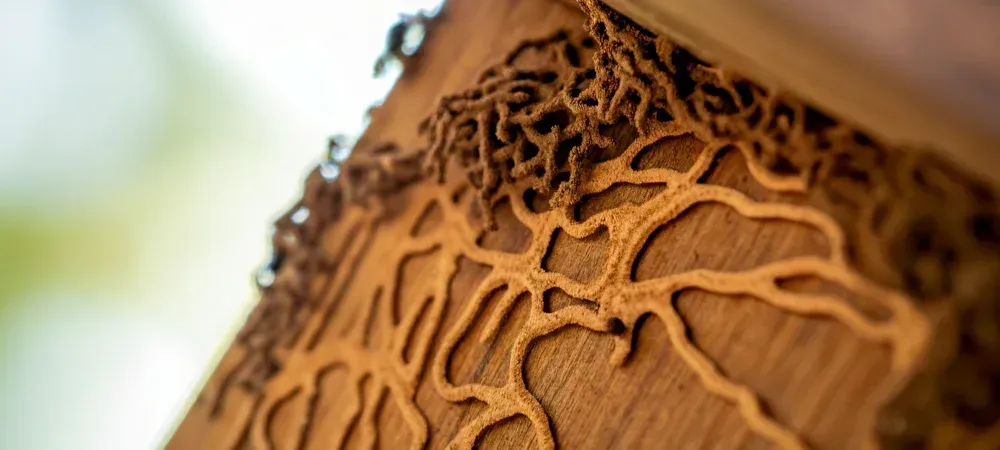
One of the most common termite damage signs is hollow-sounding wood. Termites consume wood from the inside out, leaving a thin outer surface intact. When tapped, affected areas may sound empty or papery.
Pay close attention to:
- Flooring that feels soft or uneven
- Baseboards separating from walls
- Doorframes or window frames that begin to warp
- Cabinetry that appears swollen
- Fascia boards along rooflines
Wood damage from termites often develops quietly and spreads before it is noticed.
Mud Tubes Along Foundations and Walls
Subterranean termites build mud tubes to travel between the soil and a food source. These pencil-sized tubes protect them from light and dehydration.
Mud tubes are often found:
- Along foundation walls
- Inside garages
- Behind baseboards
- Along exterior slab edges
Breaking a mud tube may reveal live workers or soldiers, but even if it appears inactive, the colony may still be present.
Carton nest material — a mud-like structure created from soil and digested wood — may also appear inside wall voids or attic spaces.
Discarded Wings Near Windows and Doors
Swarmers are reproductive termites that emerge to start new colonies. After mating, they shed their wings. Discarded wings near windowsills, sliding glass doors, or light sources are a significant termite warning sign. Swarmers are often mistaken for flying ants, but their presence inside the home should always prompt professional evaluation. Seeing swarmers typically means a mature colony is nearby.
Bubbling Paint and Unexplained Surface Changes
Paint peeling or bubbling without moisture intrusion can sometimes indicate termite activity behind the surface. As termites tunnel through wood, they create air pockets that cause surface materials to separate or distort.
Wood swelling, unexplained cracks, or subtle wall discoloration should not be ignored — especially in areas prone to moisture.
Termite Droppings and Frass Piles
Drywood termites leave behind frass — small, pellet-shaped termite droppings that resemble fine sawdust.
Frass piles may accumulate:
- Beneath window frames
- On top of baseboards
- Inside cabinets
- On attic insulation
- Furniture
Unlike subterranean termites, drywood termites push their droppings out through tiny kick-out holes, leaving visible evidence of internal activity.
Subtle Structural Changes Homeowners Shouldn’t Ignore
Some signs are less obvious but equally concerning:
- Doors that suddenly stick.
- Floors that begin to sag slightly.
- Trim pulling away from drywall.
- Hairline cracks forming along ceilings or walls.
These subtle shifts can indicate wood damage from termites occurring behind finished surfaces.
How to Spot Termites in Your Home Before Damage Spreads
The challenge with termite inspection in Florida is that much of the activity occurs inside walls or underground. Homeowners can monitor for warning signs, but true early detection requires professional training and specialized tools.
By the time obvious damage appears, colonies may have been active for months or even years.
Why Scheduling a Professional Termite Inspection in Florida Matters
An annual termite inspection provides a structured evaluation of the home’s most vulnerable areas, including foundations, attic spaces, wooden structural components, and conducive conditions that increase risk.
Professional inspectors are trained to recognize subtle termite damage signs long before structural compromise becomes severe. Preventative termite treatment and monitoring programs can then be implemented to stop infestations at the source.
With headquarters in West Palm Beach, Hulett Environmental Services has been identifying and resolving termite infestations for over 50 years across Palm Beach County and the Treasure Coast, from Boca Raton through Melbourne. Hulett combines regional expertise with advanced detection methods designed specifically for Florida homes.
If you are noticing potential termite warning signs — or simply want confidence that your home is clear — scheduling a professional termite inspection near you is a prudent step. JUST CALL HULETT to arrange your FREE Termite Evaluation and ensure your home remains protected year-round.